
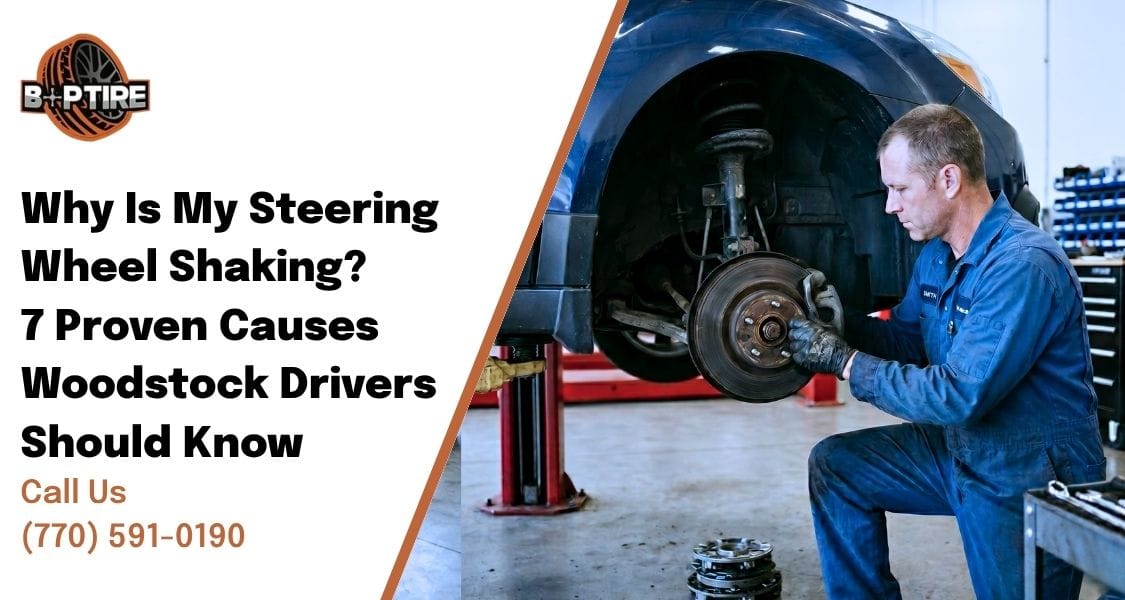

Why is my steering wheel shaking? That question usually shows up the moment a normal drive starts feeling wrong. Maybe the steering wheel vibrates on I-575. Maybe it shakes when you brake near downtown Woodstock. Maybe the car feels fine at low speeds but starts buzzing through your hands once you get on the highway.
A shaking steering wheel is not something to brush off. Sometimes the fix is simple, like tire balancing. Other times, the vibration points to worn tires, wheel alignment problems, brake rotor issues, bent wheels, or steering and suspension wear.
The good news is that the timing of the vibration often gives you a clue. A shake at highway speeds usually points in a different direction than a shake while braking. A vibration after hitting a pothole may mean something different than a slow wobble that has been getting worse for weeks.
At B&P Tires and Automotive Repair in Woodstock, GA, the goal is to find the real cause instead of guessing. A vibration may feel like one problem from the driver’s seat, but tires, wheels, brakes, alignment, suspension, and steering parts can all send that shake into the steering wheel.
Why Is My Steering Wheel Shaking? Start With When It Happens
If you are asking why is my steering wheel shaking, start by paying attention to when the vibration shows up. That detail helps narrow the issue before the car ever goes on a lift.
If the steering wheel shakes mostly at highway speeds, the cause is often tire or wheel related. If the steering wheel shakes when braking, the brakes deserve a closer look. If the car pulls to one side or the steering wheel sits crooked, alignment may be involved. If the vibration comes with looseness, clunking, or rough handling, steering or suspension parts may need inspection.
AAA’s steering wheel shake guide points to many of the same patterns: unbalanced tires, wheels out of alignment, tire damage, brake issues, and suspension or steering wear. NHTSA’s tire safety guidance also reminds drivers that tire maintenance, tire pressure, tread, and tire aging all matter because tires are the only part of the vehicle touching the road.
That is why the right first step is not to keep driving and hope it fades. The better move is to notice the pattern and get the vehicle inspected before a small issue causes more tire wear, brake wear, or handling trouble.
1. Unbalanced Tires Can Make the Steering Wheel Vibrate
One of the most common answers to why is my steering wheel shaking is tire imbalance. Tires and wheels need to spin evenly. When the weight is not balanced around the wheel assembly, the vibration can travel through the steering system and into your hands.
This often shows up at certain speeds. You may feel fine driving through town, then notice the steering wheel shaking once you reach 50, 60, or 70 miles per hour. The shake may get worse as speed increases, then calm down when you slow down again.
B&P has a dedicated tire balancing service page for this exact kind of issue. Tire balancing helps reduce vibration, improve ride comfort, and support more even tire wear.
Tire imbalance can happen after normal wear, after a tire repair, after new tires are installed, or after a wheel weight comes loose. It does not always mean the tire is ruined. In many cases, a balancing service can make the car feel smoother again.
Still, the tire should be inspected at the same time. A tire that is out of balance may not be the only issue. The technician should also look for uneven wear, sidewall damage, cupping, tread separation signs, or a wheel that may be bent.
Why Is My Steering Wheel Shaking at Highway Speeds?
The answer to why is my steering wheel shaking at highway speeds often starts with tires and wheels. Highway-speed vibration is one of the cleaner patterns because it usually becomes noticeable once the tire and wheel assembly is spinning faster.
That does not mean every highway-speed vibration is simple. Tire imbalance is common, but a bent wheel, uneven tire wear, damaged tire, loose suspension component, or alignment problem can also show up more clearly at speed.
If the vibration is light but steady, it may be easy to ignore. That is where many drivers get into trouble. The car may still drive, but vibration can add wear to tires and related parts. It can also make the vehicle less comfortable and less predictable on longer drives.
If the shake appeared after hitting a pothole, curb, road debris, or a rough patch of road, mention that during the inspection. Georgia roads can be tough on wheels, and the cause is not always obvious from a quick look outside the vehicle.
2. Wheel Alignment Problems Can Create Shaking, Pulling, and Uneven Wear
Another common answer to why is my steering wheel shaking is poor wheel alignment. Alignment affects how the tires meet the road. When alignment is off, the car may pull, drift, wear tires unevenly, or feel less stable than it should.
B&P’s wheel alignment service page explains that alignment helps the vehicle drive straight and true. That matters because misalignment does not only affect comfort. It can shorten tire life and make the car harder to control.
Alignment problems can build slowly through everyday driving. Potholes, curbs, rough roads, worn suspension parts, and normal wear can all push the vehicle out of spec. A driver may not notice the change right away because the problem creeps in over time.
Watch for a steering wheel that sits off-center, a vehicle that drifts left or right, uneven tire wear, or a car that feels like it needs constant correction. If those symptoms show up with vibration, an alignment check makes sense.
B&P’s blog also has a helpful post on tire alignment vs. tire balancing, which is useful because drivers often mix the two up. Balancing deals with how the tire and wheel assembly spins. Alignment deals with the angle and position of the wheels in relation to the road and suspension.
3. Worn or Damaged Tires Can Send Vibration Through the Wheel
If you are still asking why is my steering wheel shaking after thinking about balance and alignment, the tire itself may be the issue. Tires can look acceptable from a distance but still have wear patterns or damage that create vibration.
Common signs include uneven tread wear, cupping, scalloped wear, bald spots, sidewall bulges, cuts, or a tire that seems louder than the others. Even a small tire problem can feel larger through the steering wheel once the vehicle is moving.
NHTSA’s TireWise safety guide is a useful driver resource for tire pressure, tread, aging, labeling, and basic tire care. That kind of guidance matters because damaged or poorly maintained tires affect both safety and ride quality.
B&P’s broader tire services page is the natural local next step if the inspection points to tire wear, tire damage, rotation needs, repair, replacement, or balancing.
Do not assume a tire is safe just because it still holds air. A damaged tire may keep pressure and still create vibration. If the steering wheel shake is new, stronger than before, or paired with uneven tire wear, get the tire checked before the problem gets worse.
Why Is My Steering Wheel Shaking When I Brake?
Why is my steering wheel shaking when braking? That pattern usually points toward the brake system, especially the front brakes. When brake rotors become uneven, worn, or heat-affected, the vibration can move through the steering wheel as the pads press against the rotor surface.
This can feel like a pulsing steering wheel, a vibration through the brake pedal, or a rough stop that gets worse from higher speeds. Some drivers only notice it when braking downhill, stopping from highway speed, or slowing down in heavier traffic.
B&P’s brake inspection service page notes that brake inspections look at parts like pads, rotors, calipers, lines, and wear. That is the right kind of inspection when the steering wheel shakes mainly during braking.
A brake-related vibration is not something to keep testing every day. It may start as an annoying shake, but it can point to wear that affects stopping smoothness and control. The fix depends on what the inspection finds. Sometimes resurfacing may be possible. Sometimes replacement is the better call. Sometimes the issue is not the rotor alone.
B&P also has a brake repair service page for situations where the inspection finds worn or damaged brake parts that need repair before the vehicle feels right again.
4. Steering and Suspension Wear Can Make the Vehicle Feel Loose
Steering and suspension parts are another reason behind why is my steering wheel shaking. These parts help keep the tires planted, the steering controlled, and the vehicle stable over bumps, turns, and uneven pavement.
As a vehicle ages, parts like tie rods, ball joints, control arms, bushings, struts, shocks, and wheel bearings can wear. When that happens, the driver may feel vibration, looseness, clunking, wandering, uneven tire wear, or reduced control.
This kind of issue can be harder for a driver to separate from tire or alignment problems because the symptoms overlap. A worn suspension part can cause uneven tire wear. Uneven tire wear can create vibration. Poor alignment can make both feel worse.
That is why a full inspection matters. If the technician only balances the tires but never checks for worn steering or suspension parts, the vibration may come back or continue because the real cause was missed.
B&P’s auto repair services page fits this section because steering wheel vibration is not always a tire-only repair. General diagnostics, inspections, and broader repair experience may be needed to find the real source.
5. Bent Wheels Can Cause a Shake Even When the Tire Looks Fine
Another answer to why is my steering wheel shaking is a bent wheel. This can happen after hitting a pothole, curb, road debris, or rough pavement. The tire may not go flat, and the damage may not be obvious from the outside, but the wheel can still spin unevenly.
A bent wheel can cause vibration at certain speeds, pressure loss, uneven tire wear, or a rougher ride. Sometimes the driver remembers the hit. Other times, the damage is discovered only after the shop checks the wheel more closely.
This is especially relevant for local driving because a lot of wheel damage comes from normal road hazards, not dramatic accidents. One hard hit at the wrong angle can be enough.
If the vibration started suddenly after road impact, do not assume balancing alone will fix it. The wheel itself may need inspection. A technician can check whether the wheel is bent, whether the tire was damaged, and whether alignment or suspension parts were affected too.
6. Brake, Tire, and Alignment Problems Can Overlap
Sometimes the frustrating answer to why is my steering wheel shaking is that more than one issue is involved. A car may have unbalanced tires and uneven brake rotors. It may need alignment and have tire wear that already developed from the misalignment. It may have a worn suspension part that caused the tire to wear badly.
This is why symptom timing matters, but it does not replace inspection. Timing gives a clue. Inspection confirms the cause.
If the steering wheel shakes at highway speeds and while braking, the technician should not assume there is only one problem. If the car pulls and vibrates, alignment and tire condition should both be checked. If the tire wear looks strange, suspension parts may need a closer look.
A good inspection protects the driver from paying for the wrong repair. It also helps avoid repeat visits where one issue is fixed but the steering wheel still shakes because another cause was missed.
7. Do Not Ignore a Shaking Steering Wheel Around Woodstock
If you are wondering why is my steering wheel shaking, the wrong move is to wait until it becomes severe. A small shake may feel manageable, but vibration usually means something is not moving, wearing, stopping, or tracking the way it should.
Addressing the problem early can help protect your tires, reduce brake wear, improve handling, restore ride comfort, and prevent extra strain on related parts. It can also give you more confidence before highway driving, daily commuting, or longer trips outside Woodstock.
That does not mean every vibration is an emergency. It means the vibration deserves attention. A tire balance may solve it. A brake inspection may explain it. An alignment may correct it. A suspension check may uncover a worn part. The point is to stop guessing.
If the steering wheel shake is strong, sudden, paired with a pull, paired with brake vibration, or getting worse, schedule the inspection sooner rather than later.
Trusted Steering Wheel Vibration Help in Woodstock, GA
B&P Tires and Automotive Repair has been serving Woodstock drivers since 1995, and the shop’s service mix fits this kind of problem well. Steering wheel vibration can involve tires, balancing, alignment, brakes, wheels, suspension, or general auto repair. B&P works across those areas, which makes it easier to inspect the full picture instead of treating the symptom too narrowly.
If you ask why is my steering wheel shaking, the answer should not be a guess from behind the counter. The vehicle should be checked carefully, the cause should be explained clearly, and the repair recommendation should make sense for what was actually found.
For some drivers, the next step may be tire balancing. For others, it may be an alignment, brake inspection, tire replacement, wheel inspection, or steering and suspension diagnosis. The right answer depends on when the shaking happens and what the inspection shows.
If your steering wheel is shaking, vibrating, pulling, or pulsing while braking, bring the vehicle to B&P Tires and Automotive Repair in Woodstock. The team can inspect the issue, explain what is causing the vibration, and help you get back to a smoother, steadier ride.
Steering wheel still shaking?
Don’t guess your way through a vibration problem.
A shaking steering wheel can come from tires, alignment, brakes, wheels, or suspension wear. Bring it to B&P Tires and Automotive Repair in Woodstock and we’ll check the likely causes, explain what we find, and help you fix the real issue before it wears down more parts.
Not sure if it’s tires, brakes, or alignment? That’s exactly what the inspection is for.
Our Services
At B&P Tire, we offer a wide range of services to meet all your vehicle’s needs. Our focus on high-quality labor ensures your car gets the best care possible. And no, we don’t charge extra for the jokes.


