
Post-summer car maintenance in Woodstock, GA works better when it starts with what changed over the summer. Months of Georgia heat can be hard on batteries, tires, and cooling systems. Add vacation miles, daily commuting, traffic, and repeated stops, and wear in brakes, steering, fluids, and other parts may become easier to notice by September.
That does not mean every vehicle needs a long seasonal service list. A car that starts normally, drives straight, stops smoothly, holds its fluids, and is current on maintenance does not need problems invented for it. The useful job is to notice what feels different now than it did at the start of summer.
Maybe the engine takes an extra beat to start in the morning. One front tire is wearing faster. The temperature gauge has begun sitting a little higher. A warning light that disappeared in June is back again. Those changes give a technician something real to investigate.
At B&P Tires and Automotive Repair, that is the better way to approach September: bring the symptom, the recent history, and anything that changed. The inspection can then focus on the systems that actually deserve attention.
Post-Summer Car Maintenance Starts With What Changed
Seasonal maintenance advice often turns into the same list: check the tires, test the battery, inspect the brakes, look at the fluids. Those items matter, but a list by itself does not tell you what your vehicle is trying to say.
A better September check starts with comparison. Think about how the vehicle behaved before the hottest part of summer and how it behaves now. New vibration, slower starting, a pull in the steering, brake pedal changes, coolant loss, a recurring smell, or a dashboard light all narrow the search.
This matters because several symptoms can overlap. Uneven tire wear may point toward tire condition, pressure, balance, alignment, or suspension wear. A slow start may come from the battery, but the charging system, starter, or connections can also be involved. A code from a warning light points toward a system; it does not automatically name the part that should be replaced.
Post-summer car maintenance should make the next decision clearer, not create a reason to replace parts that still have useful life left.
1. The Engine Cranks Slower Than It Did Earlier in Summer
Battery trouble is one of the strongest reasons to look at the vehicle after a hot Georgia summer. AAA notes that heat speeds battery degradation and that batteries in hot southern locations often have shorter service lives than batteries in cooler climates. Its battery-life guide also points out that short trips may not fully recharge a battery.
The symptom may be subtle. The starter turns the engine, but it sounds slower than it did a month ago. Interior lights may dip during starting. You may also notice corrosion around the terminals or a battery that has already needed a jump.
Do not assume the battery is the only possible cause. Slow cranking can also involve the starter, alternator, cable connections, or another electrical issue. Testing the battery and charging system is more useful than replacing the battery from a guess.
B&P’s auto repair services include batteries, starters, alternators, electrical work, and diagnostics. If the start has changed after summer, describe exactly what you hear and when it happens.
2. One Tire Is Wearing Differently or the Steering Feels Off
Summer miles often leave clues in the tread. One tire may be wearing faster on an edge. The steering wheel may sit slightly off-center. A vibration may appear at a certain speed, or the car may need more correction to stay straight.
NHTSA’s TireWise guidance recommends checking tire pressure when the tires are cold and using the pressure listed on the vehicle placard or in the owner’s manual. It also stresses tread condition, tire age, balance, rotation, and general tire condition.
For post-summer car maintenance, the important part is the pattern. If one tire keeps losing pressure, wears differently from the others, or started vibrating after a pothole or curb hit, the inspection should look past the tire surface alone.
B&P’s tire services cover repair, rotation, balancing, installation, and replacement. If the vehicle also pulls or the steering wheel no longer sits straight, the shop’s alignment service is the more relevant next check.
Balance and alignment are different problems. Balance deals with how the tire and wheel assembly spins. Alignment deals with the wheel angles and how the vehicle tracks. Uneven wear can also come from worn steering or suspension parts, which is why the symptom should lead the inspection rather than a preselected service.
3. The Temperature Gauge Runs Higher or Coolant Keeps Dropping
A cooling-system problem does not always begin with steam pouring from under the hood. It may start with a temperature gauge that runs a little hotter than normal, a coolant reservoir that needs topping off again, dried coolant residue near a hose connection, or a sweet smell after the vehicle has been parked.
AAA lists a rising temperature gauge, coolant under the vehicle, a sweet coolant smell, and steam among the warning signs of overheating or cooling-system trouble. Its overheating guide also makes the safety point clear: if the vehicle is overheating, pull over safely and shut the engine off rather than continuing to drive.
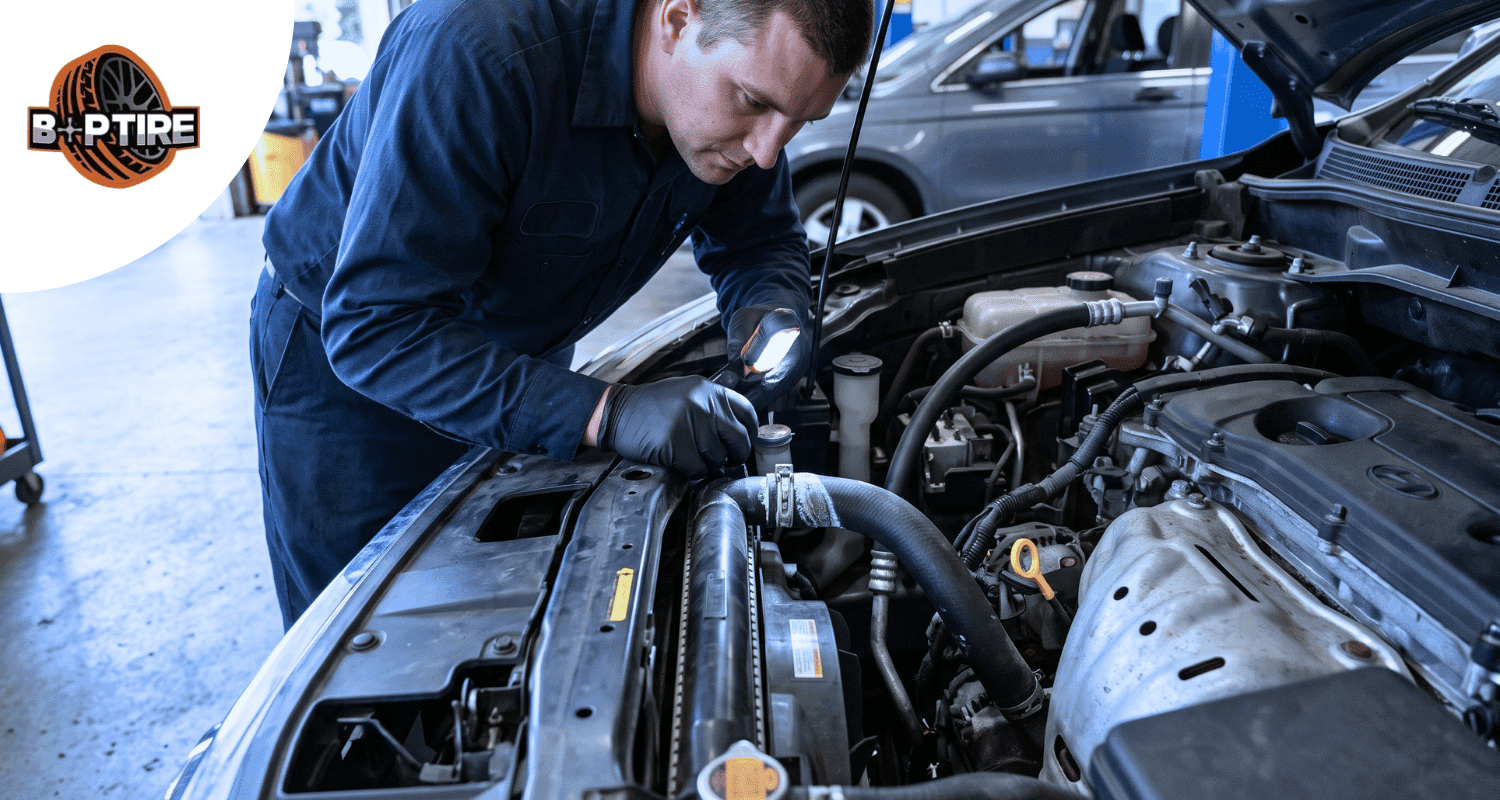
Do not remove a radiator or coolant cap while the system is hot. A hot cooling system can be under pressure and can cause serious burns. Let the vehicle cool and have the leak or temperature problem checked.
B&P’s current auto repair services include radiators, thermostats, water pumps, cooling-system work, and engine diagnostics. Post-summer car maintenance is a good time to address a cooling symptom that first appeared during the hottest weeks instead of carrying it into another season.
4. Braking Feels Different From the Start of Summer
Summer heat is not the whole story with brakes. Miles, traffic, vehicle load, repeated stopping, and existing wear all matter. By September, the useful question is whether braking feels or sounds different from a few months ago.
Pay attention to new squealing or grinding, vibration during braking, a pedal that feels softer than before, pulling during a stop, or a noticeable change in stopping feel. None of those symptoms tells you by itself that the vehicle needs a complete brake replacement.
A proper inspection can separate pad wear from rotor issues, fluid concerns, caliper problems, or another cause. B&P’s brake inspection service checks pads, rotors, calipers, lines, hoses, fluid, and related hardware.
That is the right level of certainty for post-summer car maintenance: notice the change, inspect the system, then repair what the inspection actually supports.
5. A Warning Light Keeps Coming Back
A warning light that has been ignored all summer deserves a different kind of attention than a routine maintenance reminder. The light is information. It is not a parts order.
With a check engine light, a scan can retrieve diagnostic trouble codes and point the technician toward the system reporting a fault. The code still needs context, testing, and inspection before anyone can say which repair makes sense.
AAA’s overview of common car problems distinguishes a steady check engine light from a flashing one. A steady light usually calls for diagnosis soon. A flashing light can signal a more serious problem and is a reason to avoid continuing to drive the vehicle until the issue is assessed.
B&P’s diagnostic and auto repair work covers check engine lights, misfires, leaks, electrical problems, and other faults that need more than a code reader. If the light returns after being cleared, mention that history when you bring the car in.
6. A Leak, Smell, Noise, or Maintenance Item Followed You Out of Summer
Some post-summer problems do not fit neatly into one system. You may notice a small spot under the car, a burning smell after a drive, a new hum, an occasional rattle, or fluid that needs topping off more often than it used to.
Those clues are worth writing down because timing matters. A noise that only happens on a cold start points in a different direction from one that appears after 30 minutes of driving. A leak near the front passenger side means something different from oil near the center of the engine bay. A smell that appears with the A/C running is different from one that follows hard braking.
Routine maintenance belongs here too. Engine oil, coolant, brake fluid, transmission fluid, filters, belts, hoses, and other service items should follow the vehicle manufacturer’s schedule, mileage, condition, and service history. September is useful as a reminder, but the calendar does not replace the maintenance schedule for your specific vehicle.
If you are not sure what is due, bring the service history you have. Post-summer car maintenance is more useful when the shop can see what has already been done instead of starting from a generic list.
Post-Summer Car Maintenance: When the Check Should Not Wait
Most post-summer changes can be scheduled for inspection. A few signs deserve faster action because continuing to drive may make the situation worse or reduce your control of the vehicle.
- A flashing check engine light, especially if the engine is shaking, misfiring, or losing power.
- A temperature gauge moving into the hot range, steam from under the hood, or rapid coolant loss.
- A brake pedal that suddenly feels very soft, braking that changes sharply, or a new grinding sound.
- A tire with a bulge, exposed cords, rapid pressure loss, or damage that changes the way the vehicle drives.
- A major fluid leak, strong burning smell, smoke, or another sudden symptom that makes the vehicle feel unsafe.
If the car no longer feels safe to drive, do not use the trip to the shop as another test drive. Arrange roadside help or towing instead.
A September Inspection Should Give You Priorities, Not a Shopping List
The strongest part of post-summer car maintenance is not the month. It is the chance to compare the vehicle before and after a hard season of heat, extra miles, travel, and traffic.
B&P Tires and Automotive Repair has served Woodstock since 1995. The shop handles tires, brakes, alignments, steering and suspension work, batteries, cooling-system repairs, diagnostics, A/C and heat, oil changes, and broader auto repair. That range matters because one symptom can cross more than one system.
A pull in the steering can involve tires, alignment, or worn parts. A slow start can involve the battery or charging system. A recurring temperature problem may come from a leak, thermostat, radiator, water pump, or another cooling-system fault. The inspection should narrow the cause before the repair recommendation gets specific.
That is also why this article is not a September replacement schedule. If something is still in good condition, the answer can be to leave it alone and keep watching it. If a real problem is starting, catching it now gives you a better chance to deal with it before it turns into a breakdown.
Have B&P Check What Changed After Summer
If your vehicle started cranking slower, pulling, vibrating, running hotter, braking differently, leaking, making a new noise, or showing a warning light, bring that symptom to B&P Tires and Automotive Repair in Woodstock.
The team can inspect the vehicle, explain what the symptom points to, and help you separate what needs attention now from what can wait. That is the point of post-summer car maintenance: clear answers based on what the vehicle is actually doing.
Contact B&P Tires and Automotive Repair at 9405 Main St. in Woodstock or call (770) 591-0190 to schedule a September vehicle check.
Something changed after summer?
Bring us the symptom. We’ll help track down what’s behind it.
Slow start, uneven tire wear, brake vibration, coolant smell, warning light, or something that simply feels different — B&P can inspect what changed and explain what deserves attention now.
You do not need to diagnose it before you come in. Start with what changed.
Our Services
At B&P Tire, we offer a wide range of services to meet all your vehicle’s needs. Our focus on high-quality labor ensures your car gets the best care possible. And no, we don’t charge extra for the jokes.


