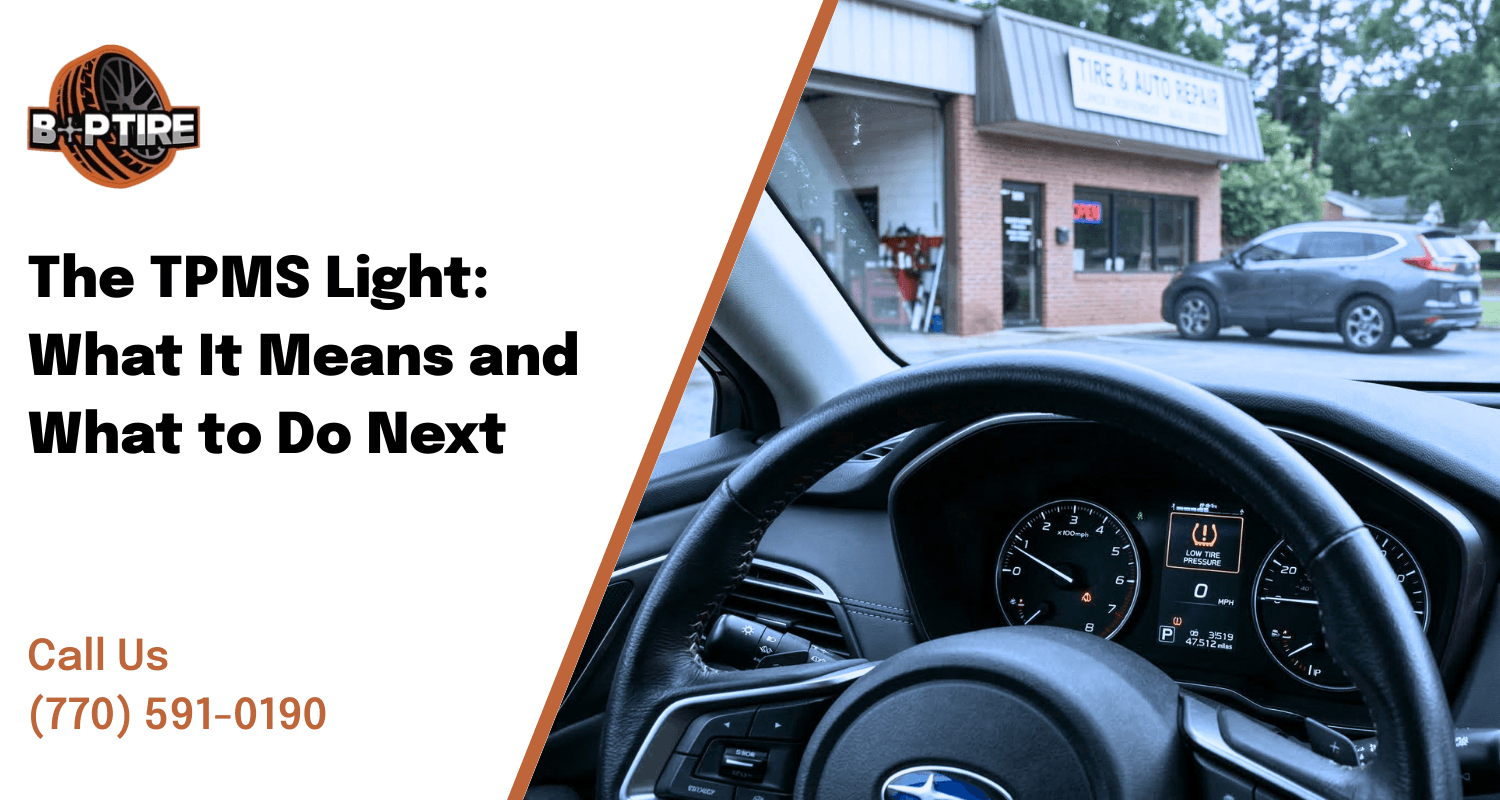
A dashboard warning light rarely shows up at a convenient time. You’re heading to work, picking up the kids, or trying to get through a full day without one more surprise from your car. Then the TPMS light comes on.
For a lot of drivers, the first question is simple: Is this a big problem, or can I keep driving?
The answer depends on what’s causing the warning.
In many cases, the TPMS light is your car’s way of telling you that one or more tires may be underinflated. Sometimes it points to a sensor or system issue instead. Either way, it’s not a light you want to ignore for long.
If you’ve been searching for reliable tire services in Woodstock, this is one of those problems that’s worth understanding early.
What the TPMS Light Actually Means
TPMS stands for Tire Pressure Monitoring System. Its job is to warn you when your tire pressure drops outside the range your vehicle is expecting.
That does not always mean you have a flat tire.
Sometimes the cause is simple:
A slow leak
A small puncture
A drop in temperature
A tire that was already a little low and finally crossed the warning threshold
Other times, the system itself may need attention. That can happen if a sensor is failing, a sensor battery is weak, or the system needs to be checked after tire service.
The important thing is this: the light is giving you a reason to pay attention. It may be minor, but it should not be ignored indefinitely.
What to Do First
When the TPMS light comes on, don’t panic. Start with a basic check.
1. Pay attention to how the vehicle feels
If the car feels unstable, pulls to one side, rides unusually rough, or you hear a flapping sound, pull over as soon as it’s safe. A seriously low or damaged tire should not be treated like a “wait and see” issue.
2. Look at all four tires
Do a quick visual walkaround. You’re checking for:
A tire that looks noticeably low
A screw or nail in the tread
Sidewall damage
One tire that looks different from the rest
3. Check the pressure with a gauge
Do not rely on appearance alone. A tire can be underinflated without looking dramatically low.
Check the recommended PSI on the driver’s door placard, not the number printed on the tire sidewall. The sidewall shows a maximum rating, not the everyday pressure target for your specific vehicle.
4. Add air if needed
If one or more tires are low, inflate them to the recommended pressure and monitor the light. If the warning stays on or comes back soon after, there’s a good chance you’re dealing with a leak or another issue that needs inspection.
Can You Keep Driving?
Sometimes yes. Sometimes no.
A good practical rule is this:
You may be able to drive a short distance if:
The vehicle still feels normal
No tire looks visibly damaged
The pressure is only slightly low
You are heading directly to add air or get it checked
You should not keep driving if:
A tire looks very low
The vehicle feels unstable
You hear unusual tire noise
You see sidewall damage
The warning comes with obvious handling changes
This is where a lot of drivers lose time and money. They assume the light is minor, keep driving for days, and turn a small leak into a ruined tire.
Why the Light Comes On When the Tires “Look Fine”
This is one of the most common frustrations with TPMS warnings.
A tire does not have to look flat to be below the proper pressure range. Even a modest pressure drop can trigger the warning on some vehicles.
That’s why the best next step is almost always a real pressure check, not a visual guess.
A few common causes include:
Normal pressure loss over time
Seasonal temperature swings
A slow puncture
A leaking valve stem
Bead or wheel sealing issues
A sensor or TPMS system fault
If you keep topping off the same tire every week or two, the problem is probably not “just the weather.” It usually means air is escaping somewhere.
When It’s a Tire Problem vs. a Sensor Problem
Here’s the practical difference.
If you check the tires, correct the pressure, and the warning stays gone, the issue was probably pressure-related.
If the light keeps returning, or all the tires test fine and the warning still won’t clear, the system itself may need service.
A shop should be able to tell you:
Whether the problem is low pressure or a leak
Whether the tire can be repaired safely
Whether the TPMS sensor is working properly
Whether the issue is with one wheel or the system as a whole
That kind of diagnosis matters because drivers often end up replacing the wrong thing when they guess.
Why It’s Worth Addressing Early
Low tire pressure affects more than just convenience.
When a tire is not properly inflated, it can wear unevenly, run hotter than it should, and make the vehicle feel less stable than normal. Over time, that can shorten tire life and make the car less pleasant to drive.
Even when the issue turns out to be minor, catching it early is usually the cheaper move.
A simple puncture in the right area may be repairable. A tire that’s driven too long while low may not be.
If you need tire repair, this is exactly the kind of issue that’s easier to solve before it turns into a replacement conversation.
What a Good Inspection Should Include
If you bring the vehicle into a shop for a TPMS warning, the inspection should be straightforward and useful.
A good visit should include:
Checking all four tire pressures
Inspecting for punctures, leaks, or visible damage
Looking at tread condition and wear patterns
Checking valve stems and sealing areas
Confirming whether the TPMS system is reading correctly
Explaining clearly whether you need air, repair, sensor service, or replacement
It should not immediately turn into a long list of unrelated recommendations.
The goal is to solve the warning light first, explain what caused it, and help you decide what actually needs attention now.
The Bottom Line
A TPMS light is not always an emergency, but it is always worth checking.
Sometimes the fix is simple. Sometimes it points to a slow leak or a system issue that will keep coming back until it’s properly diagnosed. Either way, the smartest move is to deal with it early while your options are still simple and affordable.
If your warning light is on and you want a clear answer without the runaround, B&P Tires can inspect the tires, check the pressure, and help you figure out whether you’re dealing with a leak, a repair, or a sensor issue.
For drivers looking for dependable auto repair in Woodstock, that kind of straightforward diagnosis goes a long way.
Get Your TPMS Warning Checked
B&P Tire is located at 9405 Main Street, right in the heart of Woodstock. We’ve been here for nearly 30 years, and we’ve helped thousands of families stay safe on the road—season after season.
📱 Call us at (770) 591-0190
🛞 Or stop by for a quick checkup—no appointment needed.
Our Services
At B&P Tire, we offer a wide range of services to meet all your vehicle’s needs. Our focus on high-quality labor ensures your car gets the best care possible. And no, we don’t charge extra for the jokes.


